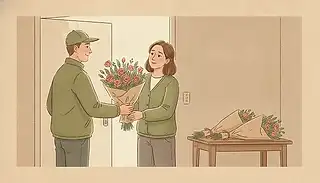
Ask “what is love bombing” and most answers hand you a shopping list: too many flowers, too many texts, gifts too soon. The list misses the point. Love bombing is intensity used — deliberately or not — to accelerate commitment before you have had time to evaluate the person. It is defined by its function, not its inventory. The flowers are not the pattern. The speed is, and so is what happens when you try to slow it down.
This page covers the definition, how the pattern usually unfolds, and the honest part most articles skip: falling hard for someone real can look almost identical from the inside. There is a test that separates them, and it is not counting bouquets.
What is love bombing?
Love bombing is a pattern where one person floods the other with affection, attention, and declarations early in a relationship, at a pace that outruns any real knowledge of each other. That pace serves a purpose: locking in commitment before evaluation can happen. The purpose can be conscious strategy or unexamined habit; the effect on the receiving end is the same.
The useful way to hold the definition is as a tool, not a mood. Intense feelings are just feelings. They become love bombing when the intensity functions as pressure — when it crowds out your ability to say “not yet,” “slower,” or “I’m not sure,” and when pulling back triggers consequences instead of adjustment.
That is also why “love bombing meaning” is so often explained badly. It is not “loving too much.” It is spending affection the way a negotiator spends concessions: to close.
What does love bombing look like in real life?
Imagine a relationship set to fast-forward. Declarations of love arrive before you have seen each other on a bad day. Conversations about moving in, meeting family, or “forever” show up while you are still learning how this person argues. Contact is constant, and the constancy carries an expectation: your slow reply becomes a topic, your evening with friends becomes a small crisis.
Gifts and gestures can be part of it, but notice what they do rather than what they cost. A gift that is genuinely for you asks nothing back. A gift inside this pattern arrives with an invisible invoice: gratitude, access, escalation. You feel vaguely indebted, and the debt is always payable in commitment.
The other constant is how it frames doubt. Your hesitation gets recast as the problem — you are “guarded,” “scared of something real,” “not matching their energy.” Notice the move: your evaluation of them has been converted into a flaw in you. For concrete scenes and messages with this mechanic unpacked line by line, see love bombing examples.
What are the phases of love bombing?
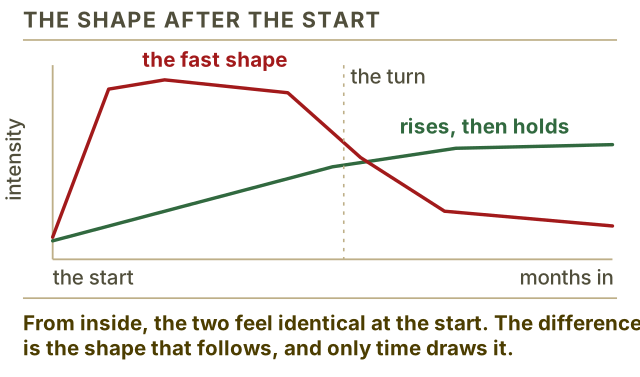
The classic arc has two acts: bombardment, then devaluation. During bombardment you are extraordinary — the exception to every rule, the person they have waited for. The intensity is real enough to feel, which is exactly why it works.
Devaluation is the turn. Once commitment feels secured — you are exclusive, you have said it back, you have reorganized your life a little — the temperature drops. The qualities that were adored become irritants. The constant attention becomes constant critique, or simply absence. The contrast is disorienting on purpose or by accident: either way, you find yourself working to win back a version of the relationship that was, in hindsight, a sales period.
Not every intense start ends in devaluation, and this page cannot tell you which kind you are in. What it can tell you: the pattern is the pair. Intensity followed by punishment-flavored withdrawal is the signature. Intensity that settles into ordinary, respectful affection is just a strong start.
Is love bombing intentional?
Sometimes, and it matters less than you would hope. Some people run intensity as a deliberate tactic — secure the commitment, then relax into who they actually are. Others are not scheming at all: they chase the high of a beginning, mean every word in the moment, and have never learned that their pace is a form of pressure.
From where you stand, intent is nearly unknowable and mostly beside the point. Pressure is pressure whether it is manufactured or sincere. The same test applies to both — how the person responds when you name your pace — and your options are the same either way. This is also worth saying because the internet’s favorite answer, “love bombers are narcissists,” is a diagnosis, and diagnoses belong to clinicians, not to websites or worried partners. A pattern of behavior is observable. A personality disorder is not yours to assign.
Love bombing vs genuine love: how do you tell?
Here is the honest difficulty: falling hard for someone real also involves constant texting, sleepless giddiness, and premature talk about the future. Two beginnings can be indistinguishable by inventory. If intensity alone were the test, plenty of happy couples would fail it.
That intensity has a literature of its own. Amir Levine and Rachel Heller’s Attached is a popular-audience account of adult attachment styles, and one of its running points is that a fast, hungry start is not by itself a signal. The book describes how people differ in what closeness feels like; it is not a reading of your relationship.
The test is not the amount of affection. It is the reaction to a boundary. Say some version of “I really like this, and it’s moving fast for me — can we slow down?” Then watch, over time, not just in the first conversation.
Genuine interest can absorb that sentence. There may be disappointment, even a wobble — that is human — but the pace actually changes, and you are not billed for it later. Love bombing cannot absorb it, because the speed is the strategy, conscious or not. The response is pushback dressed in various costumes: hurt that becomes your fault, sulking, a sudden cold front, doubled intensity. Then there is the classic reversal — “I thought you felt the same, maybe you’re not ready for something real.”
One request, one reaction, is a data point. The pattern across several boundaries is the answer. If you want the mirror image — what a good response to “slower” actually looks like — the green flags page describes it in the same scene-by-scene terms.
What does the pace test sound like, step by step?
The pace test is one plain sentence about your own speed, followed by weeks of watching. The sentence is some version of “I really like this, and it’s moving faster than I’m comfortable with; can we slow down?” Then you watch what actually happens. Not the first reply. The follow-through.
Run it in three parts:
- Name your pace as a fact about you — not an accusation, not a review of their behavior. Say “this is fast for me”. A statement about yourself is the hardest kind to argue with, which is exactly why the response to it is informative.
- Ask for something specific. “Slower” is easy to agree to and easy to ignore. For example, “let’s keep some evenings separate” or “I’d rather not talk about moving in yet” gives the request edges, so you can see whether it was honored.
- Watch the trend, not the moment. Almost anyone can produce a gracious first response. The test lives in week two and week three.
And two reactions are worth telling apart. An absorbing reaction is one that may include real disappointment, but the pace changes and stays changed, and you are never billed for asking. A converting reaction turns your request into a referendum — hurt that becomes your fault, a sudden chill, or warm agreement followed by doubled intensity, as if the sentence had never been said. One reaction is a data point; the same reaction at several boundaries is the answer.
What is love bombing NOT?
This part protects you from the opposite error: pattern-matching every warm gesture into a red flag.
It is not enthusiasm. Someone texting you a lot in week two because they like you, and cheerfully recalibrating when you mention you need slower mornings, is not love bombing. The recalibration is the whole difference.
It is not generosity. Gifts, planned dates, effort — none of it is inherently a tactic. Generosity without an invoice is just generosity.
It is not mismatched pace by itself. Two people often want different speeds. One partner wanting more is a conversation; one partner treating your speed as an offense to be corrected is a pattern.
And a single intense beginning is not a verdict on a person. This site describes behavior; it does not diagnose people, and it does not know your partner. A strong start plus respect at your boundaries is, frequently, just the beginning of something good.
Why does love bombing work on smart people?
Because it does not target intelligence — it targets calibration. Being analytical protects you from bad arguments; love bombing does not make an argument. It sets a tempo. There is nothing to fact-check in “I’ve never felt this way,” no claim you can falsify in a stream of good-morning messages. The flood is real attention, really arriving, and your mind is being asked to evaluate a feeling, not a statement.
Why early intensity registers so strongly at all is an older question than this pattern. The idea that adult couples run on the same attachment machinery as children and caregivers comes from Hazan and Shaver’s 1987 paper, which is where that comparison starts. It describes a research tradition, not your relationship.
A few honest mechanics behind this:
- The material is genuine. The attention exists, the plans exist, the intensity is observable. Smart people trust evidence, and the evidence of interest is everywhere. What the evidence cannot show is what it is for.
- Your reasonableness gets recruited. Thoughtful people give benefit of the doubt, dislike jumping to conclusions, and can build an articulate case for someone else’s behavior. The pattern leans on exactly those virtues.
- The evaluation window closes early. The whole function of the speed is that commitments pile up before assessment can happen. By the time questions surface, you are already rescheduling your life — and re-deciding feels more expensive than deciding would have.
So if this pattern caught you once, that is not a verdict on your judgment. It worked through your judgment’s best habits, which is why the defense is not being smarter — it is reintroducing the one variable the pattern cannot supply: time.
What can you do if this sounds familiar?
The options here are for you, not for them. There is no script on this page for confronting anyone or managing them into slowness — that is not your job, and with some people it is not safe to attempt.
Reintroduce time. Time is the one thing this pattern cannot fake its way through. Keep your own pace deliberately: your friends, your evenings, your reply speed. Watch what happens to the affection when it is no longer being answered instantly.
Run the boundary test once, and believe the result. Not as a trap — as information. You are allowed to take the reaction at face value instead of explaining it away.
Borrow outside eyes. Weeks of intensity distort calibration from the inside. A friend who has watched the timeline from outside often sees the shape you cannot. The early weeks are exactly when patterns are cheapest to read. The early red flags when dating page covers what that first month tends to reveal, and the patterns hub names the mechanics this one often travels with.
Where this page stops
This page describes a pattern. It cannot tell you what is happening inside your own relationship, and it is not therapy or a substitute for it.
One boundary worth stating plainly: if pulling back feels frightening rather than awkward — if you are weighing what they might do, not how they might feel — that is beyond the scope of a page about dating patterns. What you are recognising then is fear rather than frustration, and a page is the wrong tool for it. That belongs with a professional, or a domestic abuse service in your country.